
How to Choose a Dress for Your Body Shape
Body shape advice gets a bad reputation, and often deserves it. Nobody needs to be sorted into a fruit. What the idea is genuinely useful for is narrower and more practical: it tells you where a dress should hold you and where it should be allowed to move. Get that one decision right and almost any silhouette works. Get it wrong and even a beautifully made dress will feel like it is fighting you all evening.
Find your widest and narrowest points first
Forget the categories for a moment. Stand in front of a mirror and answer two questions: where is your body widest — shoulders, waist or hips? And where is it narrowest? A dress flatters when the narrowest point of the garment lands on the narrowest point of you. That is the whole principle. Everything below is just the common variations of it.
Hourglass — shoulders and hips balanced, waist defined
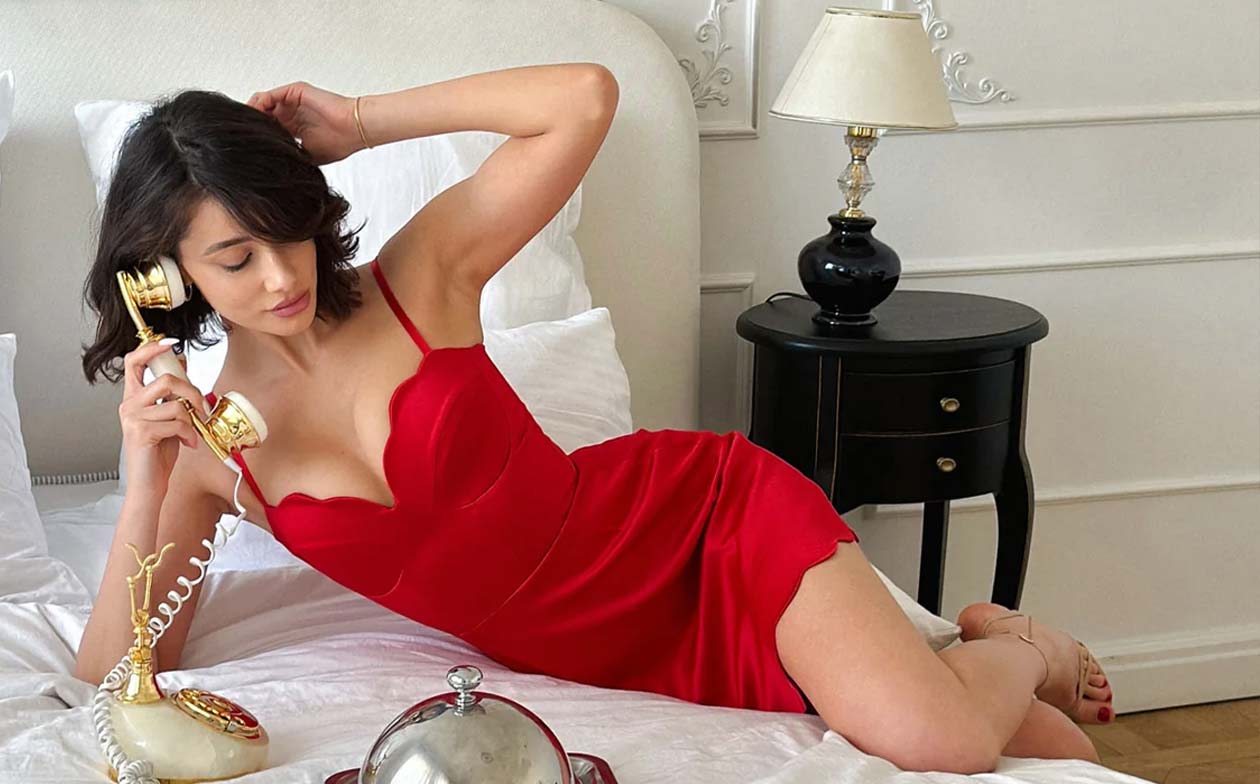
The waist is the asset, so the dress needs to acknowledge it. Corset bodices, wrap fronts, seamed waists and anything with vertical panelling through the middle all do this. What tends to disappoint is the shapeless shift: it hides the one proportion that makes the outfit read as deliberate. Length is free — mini, midi or maxi all work as long as the waist is marked.

Pear — hips wider than shoulders
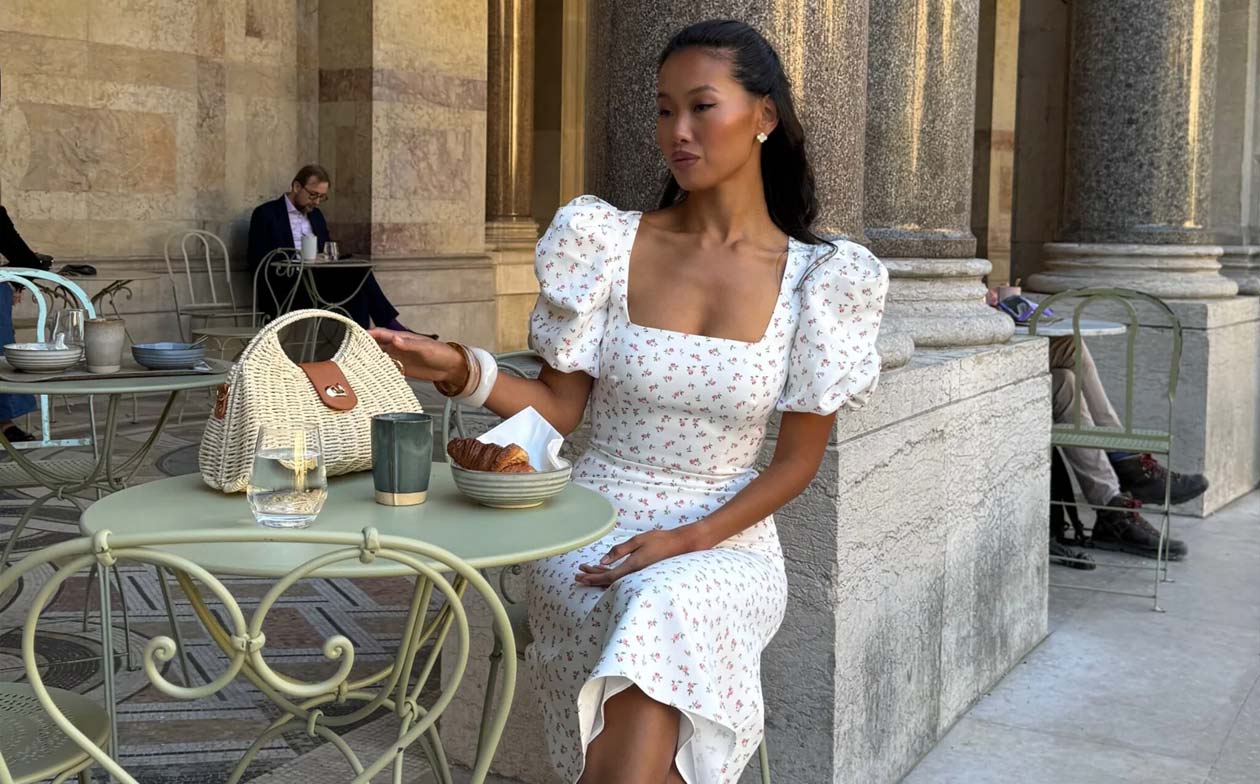
Draw attention upward and let the skirt skim rather than cling. Structured or detailed necklines, off-shoulder and bustier tops, puffed or defined sleeves all lift the eye. Below the waist, look for an A-line or a skirt cut with drape rather than stretch. A midi that flares gently from the natural waist is the most reliable shape in this group — it defines the smallest part of you and then stops competing.
Apple — weight through the middle, often with great legs
Avoid anything that grips the waist tightly and then stops. Instead, use an empire line that releases just under the bust, or a column dress with a soft vertical fall. V-necklines help; so do wrap fronts, which create a diagonal line rather than a horizontal one. If your legs are your favourite feature, this is the shape that carries a mini best.
Rectangle — shoulders, waist and hips close in width
The goal is to create curve rather than reveal it. Anything that adds volume at the hem or the shoulder — a flared skirt, a peplum, a draped bodice — builds the shape a straight cut will not. Belts and corsetry are your friends here, because they invent a waist. Ruching across the middle does the same trick more softly.

Inverted triangle — shoulders broader than hips
Balance downward. Fuller skirts, wrap and A-line shapes, and details at the hem all add visual weight where you want it. Keep necklines open and uncluttered: a deep V or a scoop breaks up the shoulder line, while a heavily embellished bateau neck emphasises it.
Three practical checks before you buy
- Sit down in it. A dress that only works standing is a dress you will spend an evening managing. Boning that digs in when you sit will not soften later.
- Raise your arms. If the hem climbs and stays climbed, the skirt is too narrow for the fabric.
- Photograph it. Fabrics behave differently under flash. Satin catches light and can exaggerate; matte crepe and velvet absorb it. If the event will be photographed, judge the dress the way the camera will see it.
When measurements matter more than shape
For fitted and corseted styles, the category matters less than the numbers. A boned bodice is built to a specific bust and underbust measurement, and no amount of styling advice compensates for the wrong size. Our guide to corset dress sizing covers which measurement actually decides the size, and the size table has the full chart.

If you would like a second opinion before you order, write to us — we answer with honest advice rather than a sales pitch, and in Calgary and Edmonton we can deliver two sizes so you can decide at home.